Reference platform PURE Power Burundi
Burundi — the reference platform.
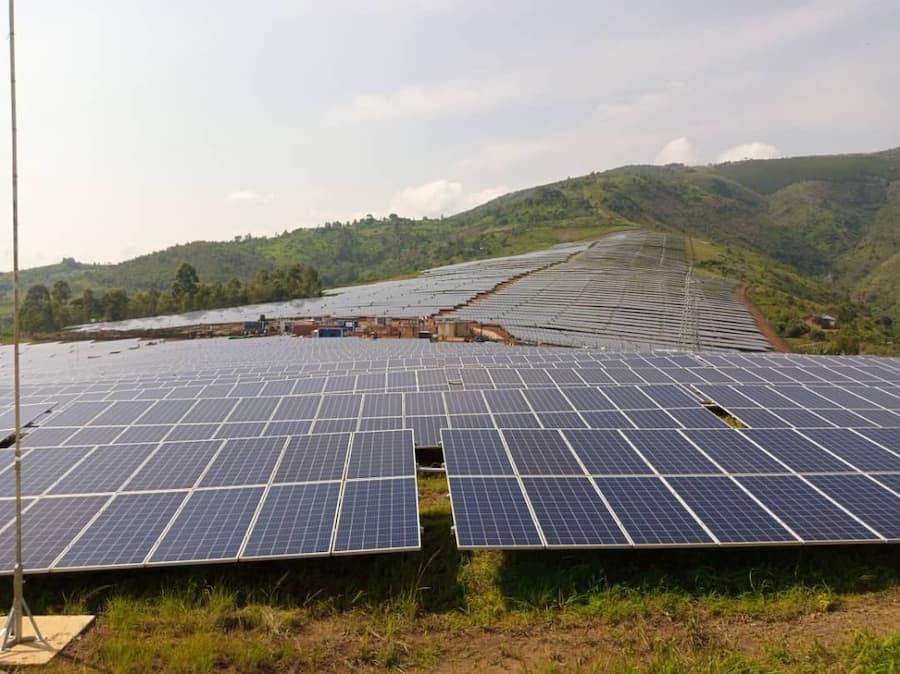
Burundi is where the model is proven first. The team behind Gigawatt Burundi S.A. has worked in the country for more than a decade; it developed, and still manages, Mubuga, Burundi's first utility-scale solar plant, in service since 2021. The energy ministry has endorsed in principle the company's 150 MW platform of new generation on and off the grid; the rural electrification agency signed a memorandum of understanding with the company; and the first agro-energy hubs are under construction with the Food and Agriculture Organization of the United Nations (FAO), from a national base at the CEFORE-Rusi campus.
Program instruments in Burundi are entered into by Gigawatt Burundi S.A., with its institutional partners; the network's Burundian incubators host the first clusters.
At a glance
Figures are indicative, drawn from World Bank World Development Indicators, national energy compacts and national statistics, latest available year; full sources on request.
- Population
- 12.3 million (2024 census)
- Rural population
- 75% (2024 census)
- Agriculture
- 85% of employment; ≈34% of GDP (2025)
- Electricity access, grid
- 8% (2025); 26% from all sources
- Electricity access, rural
- 2–3% (2025)
- Clean cooking access
- 0.1% (2023)
- Currency
- Burundian franc (BIF); foreign exchange and fuel scarce
- Languages
- Kirundi, French, English; Swahili in trade
1More than a decade in Burundi
The management and operating team of Gigawatt Burundi S.A. developed, and continues to manage, Mubuga: 7.5 MW in Gitega province, Burundi's first utility-scale solar plant, in service since 2021 under a 25-year power purchase agreement with the national utility, the Régie de Production et de Distribution d'Eau et d'Électricité (REGIDESO).
- Every stage already delivered once. Site, permits, public-private partnership, power purchase agreement, international finance and insurance, construction and five years of operation — with the ministry in charge of energy, REGIDESO, the water and energy regulator (Autorité de Régulation des secteurs de l'Eau potable et de l'Énergie, AREEN) and the public-private partnership authorities.
- Permanent teams in the country. Engineering and operations are based in Burundi. The hubs are run by the same organization, not by a project office set up for them.
- A Burundian company. Gigawatt Burundi S.A. is a société anonyme under Burundian law, working with the country's ministries, agencies, campuses, banks and cooperatives.
- A wider record. The same team was first to market in renewable energy in several African countries.
2The platform behind the program
After review by a ministerial commission, the ministry in charge of energy gave its endorsement in principle to Gigawatt Burundi S.A.'s 150 MW integrated platform of hydropower, solar photovoltaic with battery storage and decentralized mini-grids. The endorsement covers new generation on the national grid, off the grid and distributed across the country. For the balance of the 150 MW, the ministry's services, with REGIDESO, the Agence Burundaise de l'Électrification Rurale (ABER) and AREEN, support the identification and securing of new hydropower and solar sites.
7.5 MW
In operation since 2021
150 MW
Platform endorsed in principle
≈84 MW
In development on awarded sites
10 sites
Mini-grids and hubs awarded
| Project | Generation | Capacity | Status |
|---|---|---|---|
| Mubuga, Gitega province | Solar, grid-connected | 7.5 MW | In operation since 2021; 25-year power purchase agreement with REGIDESO |
| Higiro, beside Mubuga | Solar with battery storage, grid-connected | 10 MWp with 4 MWh of storage, expandable to 25 MWp | Memorandum of understanding with the Government; public-private partnership and power purchase agreement in negotiation |
| Rushiha | Hydropower, grid-connected | 13 MW | Feasibility accepted; public-private partnership and power purchase agreement in negotiation |
| Cankuzo (Nyarwana) | Solar with storage, grid-connected | 50 MWp | Site awarded for feasibility and construction; initial site assessment complete |
| Nyengwe, Mushara and Mutsindozi rivers | Small hydropower, distributed | Five sites, ≈10.9 MW | Sites awarded for feasibility and construction |
| Ten sites around Makamba, Ruyigi, Muyinga and Cankuzo | Mini-grids with agro-energy hubs, off-grid | ≈1 MW per site | Sites awarded; being aligned with ABER's programming under its memorandum of understanding |
| The first agro-energy hubs | Solar with storage at the hub | 15 to ≈400 kWp, by site | First hub under construction with FAO; ground broken 4 August 2026 |
Capacities and status as recorded by the ministry in charge of energy in its letters and in its commission's review of the platform. MWp is megawatts of peak solar capacity; MWh, megawatt-hours of storage.
3Why the platform carries the rural program
A rural hub is small. On its own, management, engineering, procurement, environmental and social management, finance and reporting would weigh on every price it charges. In Burundi these costs are shared across a platform of grid-connected plants and hubs, so each hub carries only a small share of them, plus its own equipment, local staff and running costs.
- One organization. One management, engineering and finance team, one environmental and social system and one reporting line serve the grid plants and the hubs alike.
- Procurement at platform scale. Panels, inverters, batteries and spares are bought alongside utility-scale orders and held in one national stock at Rusi.
- One operating system. Monitoring, maintenance and dispatch built for grid-scale plants extend to every hub.
- One sponsor to assess. Lenders and funders assess one sponsor with an operating asset and lender-standard reporting, not a hundred small projects.
- Grid and off-grid planned together. Hubs are built ready to interconnect when the national grid arrives, on terms agreed in advance.
The result is lower prices for hub services and a faster start at each new site.
4Instruments in place
- Ministry in charge of energy (MRMEICT): endorsement in principle of the 150 MW integrated platform — new generation on and off the grid: hydropower, solar with battery storage and decentralized mini-grids; ten mini-grid sites awarded; five small hydropower sites awarded
- Memorandum of understanding between ABER and Gigawatt Burundi S.A. — a framework for accelerating rural electrification through productive-use energy hubs, mini-grids and household solutions: ABER leads planning and programming; Gigawatt Burundi S.A. develops, finances, builds and operates over the long term
- Cooperation protocol between the Ministry of Environment, Agriculture and Livestock (MINEAGRIE) and Gigawatt Burundi S.A. — bringing the hubs into the Ministry's own programs, including the national agro-energy hub program
- Memorandum of understanding with FAO on the productive use of renewable energy in agriculture; ground broken together on the first agro-energy hub, 4 August 2026
- Memorandum of understanding between the CEFORE-Rusi polytechnic campus and Gigawatt Burundi S.A. — operations headquarters, demonstration hub and farm, national technical base and national training academy
- Framework memorandum of understanding between the African Agribusiness Incubators Network (AAIN) and Gigawatt Burundi S.A., signed at Bujumbura
- Collaboration agreement between the Banque d'Investissement et de Développement pour les Femmes (BIDF) and Gigawatt Burundi S.A. — signed at Gitega — Gigawatt Burundi S.A. designated BIDF's technical partner for women-led energy enterprises and women's qualification in energy trades
5Rusi: headquarters and national base
The Centre de Formation Polytechnique et de Reconversion Professionnelle de Rusi (CEFORE-Rusi) is a public polytechnic in Gitega province, inaugurated in September 2022 as a presidential project. It trains in agropastoral production, electromechanics, electricity, automotive and motorcycle technology, green energy and entrepreneurship. Under its memorandum of understanding with Gigawatt Burundi S.A., the campus is designated as:
- Operations headquarters of the PURE Power Burundi program.
- Demonstration hub and farm: the flagship hub where ministries, funders, trainees and cooperatives see the model working.
- National academy: training and train-the-trainers for hub operators and for solar, refrigeration and e-mobility technicians, with priority for women.
- National technical base: equipment assembly, main repair and central warehousing for the whole network.
- Anchor of the national e-mobility network and site of the campus's own renewable energy supply.
Training, the demonstration hub and a public-private partnership are prepared in parallel. The partnership, prepared jointly with the Centre under Burundi's public-private partnership law, covers the campus energy supply, the e-mobility station and the assembly, repair and warehousing facilities, with revenue-sharing designed to raise the Centre's own revenue. The parties also intend the campus to host PURE Power Africa's continental train-the-trainers academy.
6Agriculture: the economy the hubs serve
Agriculture accounts for about 85% of employment and about a third of GDP; three in four Burundians live in rural areas. Cassava, banana, sweet potato, maize, beans and rice are the volume crops; coffee and tea are the main agricultural exports and a leading source of foreign exchange. Farms average well under a hectare.
That dependence makes the economy sensitive: a poor season, a price fall or a spoiled harvest reaches household income, food security, export earnings and the foreign exchange that pays for fuel and imports, all at once. Post-harvest losses run near a fifth for maize, and some 120,000 hectares of marshland remain largely undeveloped. For the same reason, each service at the hub reaches most of the population:
- Fewer losses. Milling, drying and cold storage keep more of each harvest.
- A second season. Low-lift solar irrigation brings marshland and dry-season crops into production.
- Value kept in the district. Processing, packaging and storage add income before produce leaves, and replace imported processed food.
- Foreign exchange saved and earned. Solar power replaces imported diesel; better-handled coffee, tea and horticulture earn more abroad.
- Rural jobs and credit. Hubs employ young people and women locally, and their records of deliveries and payments give banks a basis to lend.
Employment and GDP: World Bank World Development Indicators, 2025; rural population: 2024 general census.
7Energy access, compact and regulation
Burundi starts from one of the lowest access rates in the world. About 26% of the population has electricity from any source and 8% from the national grid (2025); in rural areas, where three in four Burundians live, access is 2–3%; clean cooking reaches about 0.1%. The National Energy Compact under Mission 300 (September 2025) targets 70% electricity access, 300 mini-grid sites, 850,000 solar home systems and 40% clean cooking by 2030.
The electricity law as amended on 22 March 2024 opened generation, distribution partnerships, mini-grids and off-grid sales to private operators; a rural electrification and mini-grid decree and a universal energy access fund followed in March 2026.
Access: National Energy Compact (2025) and Government of Burundi data; clean cooking: World Bank World Development Indicators, 2023.
8Small country, full reach
Burundi covers about 27,800 km² and is one of Africa's most densely populated countries. From the Rusi base and Bujumbura, technicians, spares and replacement equipment reach any site in the country within a working day.
That is part of what Burundi demonstrates: how quickly one base, one stock of spares and one team can extend a hub network to every province, and what national coverage costs and delivers. The record built here is the evidence for the larger countries that follow.
9Fuel, foreign exchange and electric mobility
Burundi imports virtually all of its fuel. With foreign exchange scarce, fuel shortages recur, and queues at filling stations disrupt transport, trade and the movement of harvests.
Policy now requires the shift: under article 221 of the law fixing the State's general budget for 2026/2027, adopted on 13 June 2026, passenger cars and jeeps imported from 1 January 2027 must be electric or hybrid.
Electric fleets need charging, battery swap and maintenance outside the capital. The hubs provide them on solar power, and the national e-mobility network is anchored at Rusi, with assembly, maintenance and training for mechanics and riders. Motorcycle taxis, collection rounds and cooperative transport then run on electricity generated in the country instead of imported fuel, and the foreign exchange saved stays available for other imports.
10How deployment runs
The first hubs are under construction with FAO, and the demonstration hub at Rusi follows. The ten mini-grid sites awarded by the ministry in charge of energy are being aligned with ABER's programming under its memorandum of understanding; the national agro-energy hub program of the Ministry of Environment, Agriculture and Livestock provides the next wave; a national deployment plan runs to 2030. In parallel, the grid-connected projects move through their public-private partnership and power purchase agreement negotiations, and Rusi assembles, repairs, warehouses and trains for the whole network.
11Counterpart institutions
- Energy
- Ministère des Ressources Minières, Énergétiques, de l'Industrie, du Commerce et du Tourisme (MRMEICT); REGIDESO (utility); ABER (rural electrification agency); AREEN (regulator)
- Agriculture
- Ministère de l'Environnement, de l'Agriculture et de l'Élevage (MINEAGRIE)
- Finance
- Ministère des Finances, du Budget et de la Planification Économique
- Training
- CEFORE-Rusi polytechnic campus, Gitega province; University of Burundi
12Programs the hubs can attach to
- Soleil-Nyakiriza solar energy program and its solar and clean-cooking fund (World Bank)
- National agro-energy hub program (Ministry of Environment, Agriculture and Livestock)
- Global Agriculture and Food Security Program (GAFSP) national operations
- Mission 300 National Energy Compact and its results-based access windows
- FAO country program on productive use of renewable energy
13Next step
Engagement runs through the Bujumbura headquarters.
A country launch-phase package — site assessment, equipment configuration against local crops and volumes, the partner and program map, and a funding roadmap built on programs already financed in the country — is prepared jointly with the country member for an interested government or funder.