One powered site. Twelve services. One operator that stays.
An agri-value energy hub is a solar-powered rural center built around the agricultural economy of its district. Select any module to see what it does, who pays for it and which partner carries it.
Select any building or the solar field. Keyboard: Tab to a module, Enter to open it.
Solar core
One powered site. Twelve services. One operator that stays.
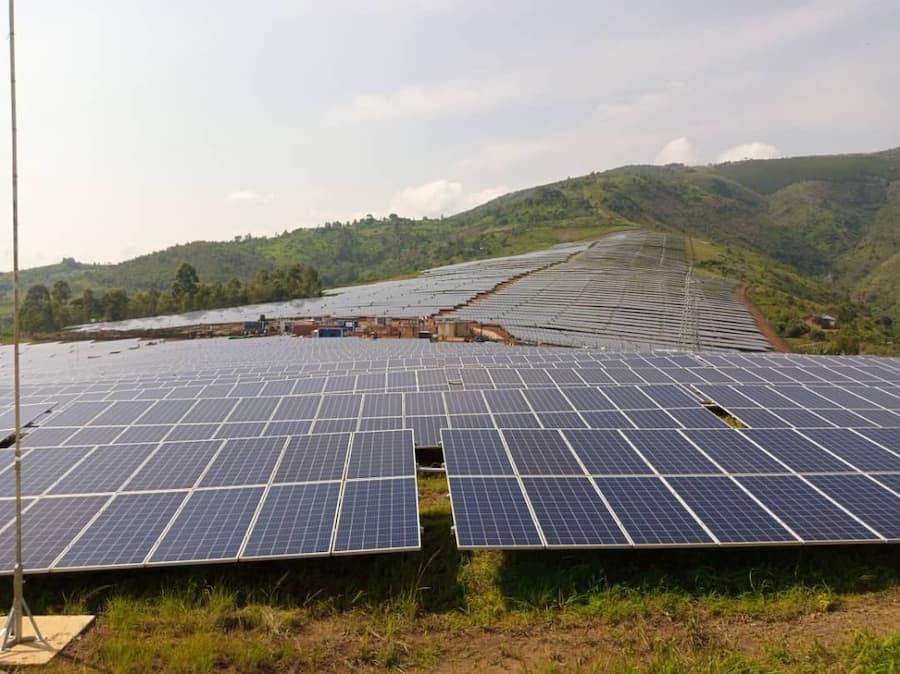
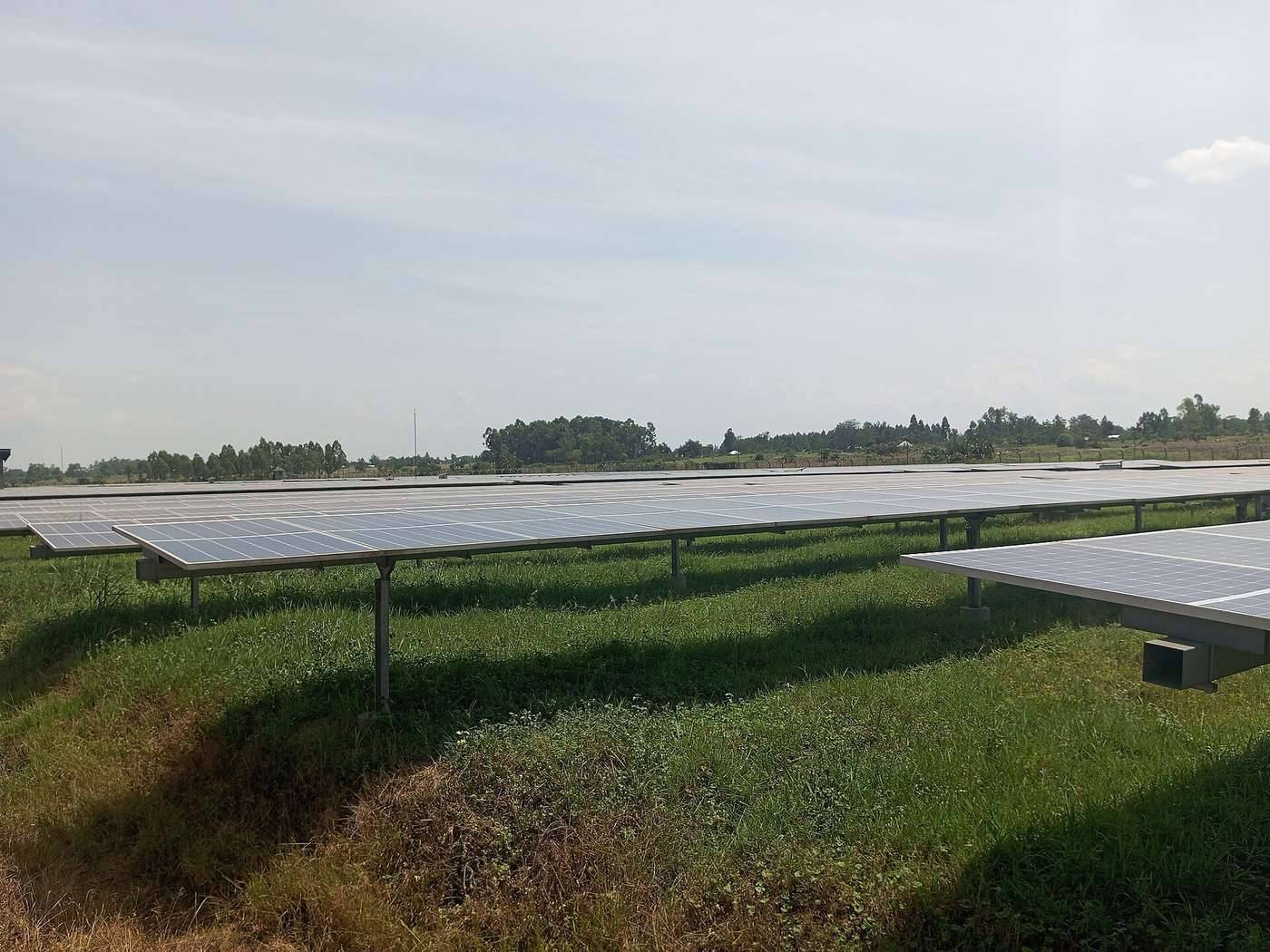
Solar photovoltaic generation with battery storage, sized for the daytime productive load, engineered for a twenty-five-year life and grid-ready by design.
Mubuga solar plant, Gitega province, Burundi — 7.5 MW, in service since 2021, developed and operated by the team behind PURE Power AfricaModule rows at a 10 MW photovoltaic plant, eastern Uganda
Photographs show the class of equipment and service, from projects across Africa; they are not PURE Power sites unless the caption says so. Image credits.
Productive power and agri-processing
Milling, pressing, drying, packing — the first service rural households pay for.
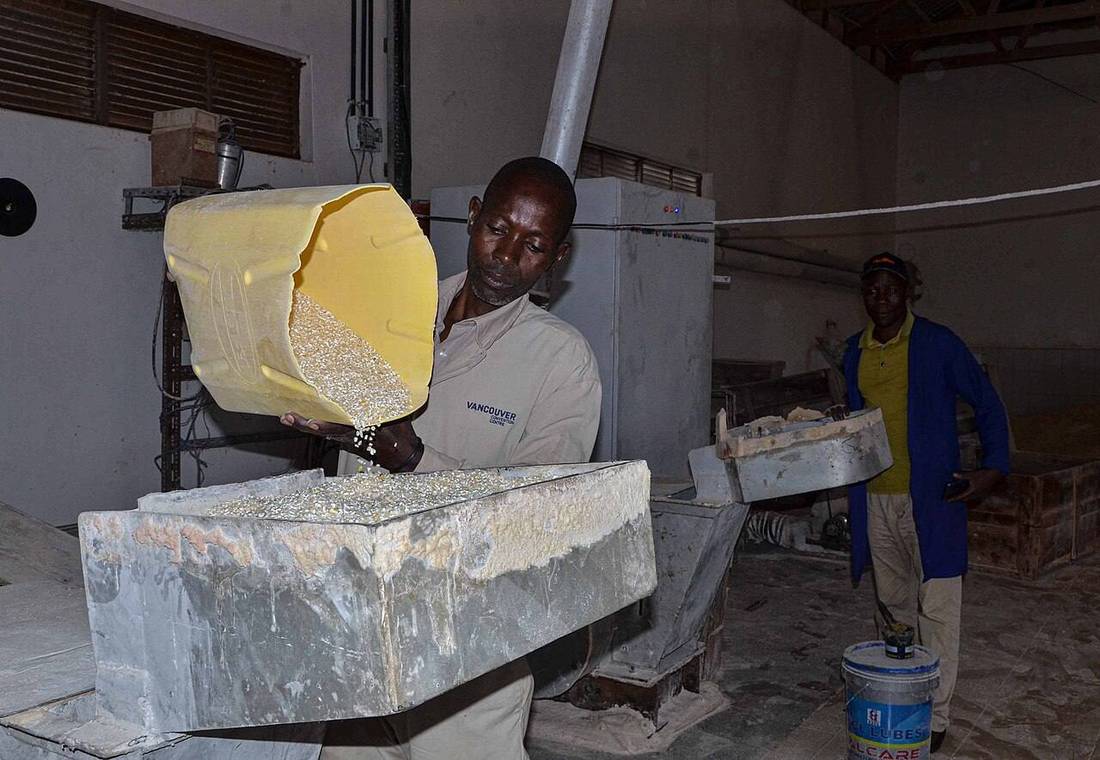
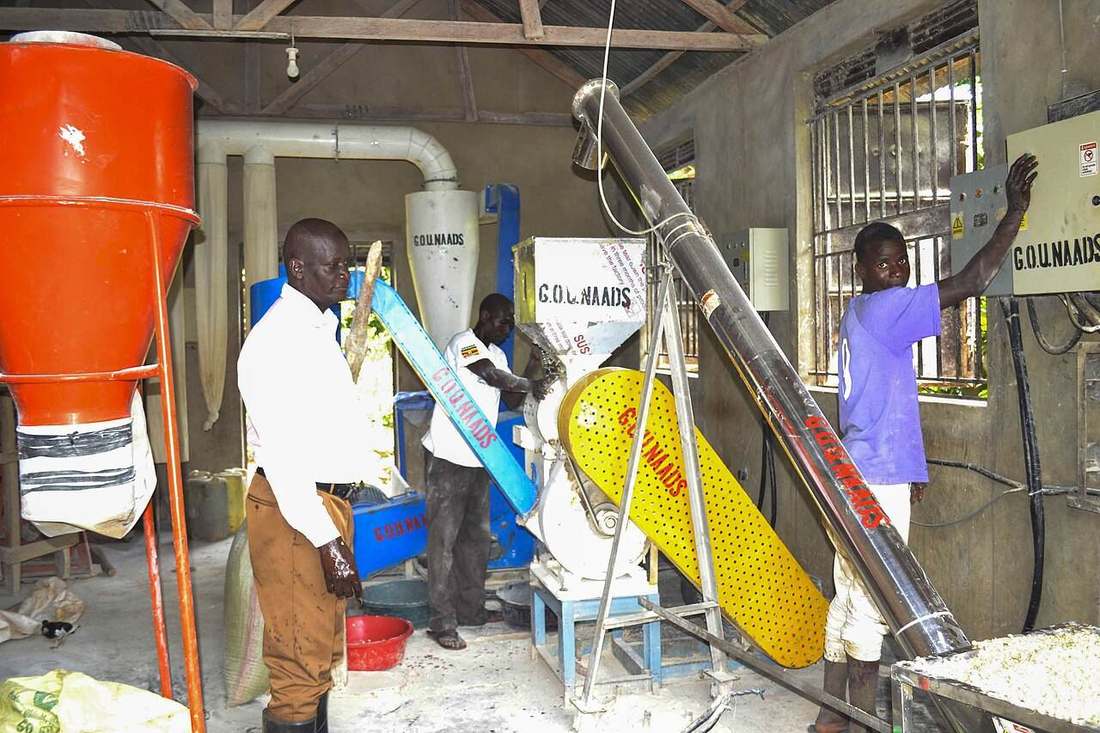
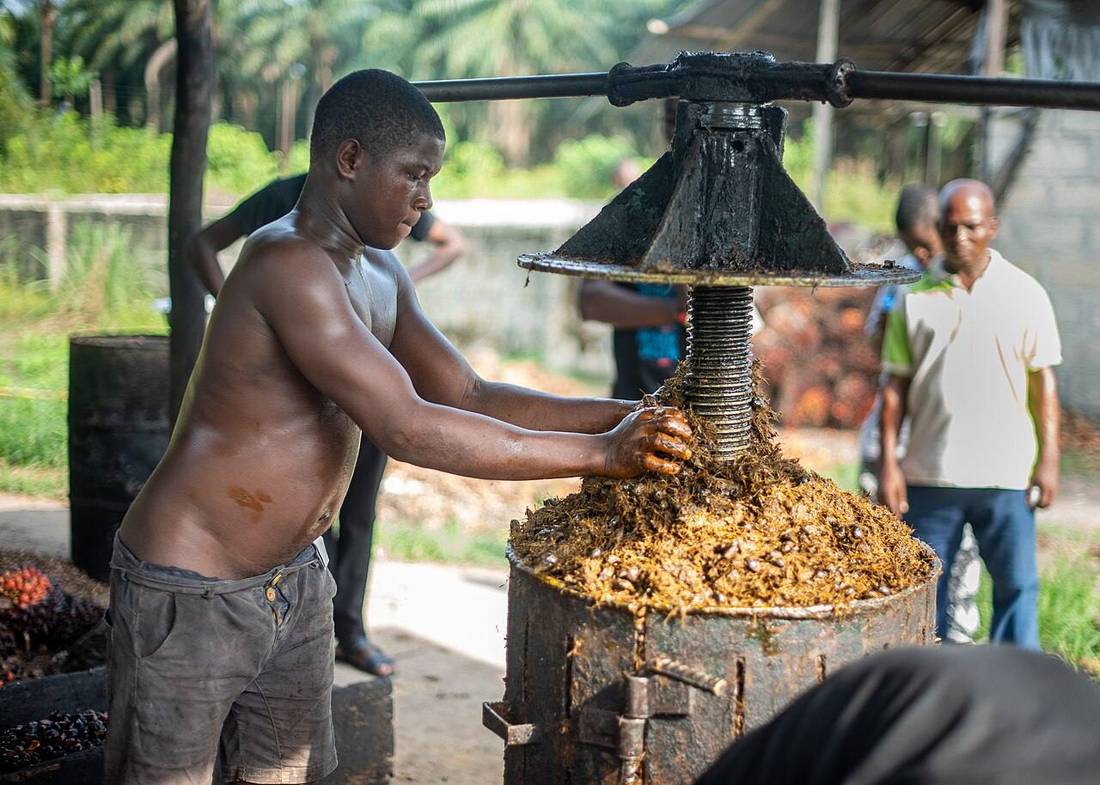
Hammer and rice mills, oil presses, dryers and packing lines arrive with the hub. Value addition moves back to the village: flour instead of grain, oil instead of seed, graded and dried produce instead of a distress sale at harvest.
Who pays
Fee for service by the kilogram, or a share of the value added on what is processed.
Who carries it
The platform owns and operates the equipment; the agricultural pillar partner specifies the value chains.
Maize mill producing flour, Uganda, 2025Hammer mill with cyclone and elevator at a maize mill, Uganda, 2025Screw press extracting oil from boiled palm fruit, Nigeria, 2025
Cold storage and cold chain
Walk-in cold rooms that turn a perishable harvest into a sellable one.
Solar cold rooms hold vegetables, fruit, fish and dairy through price troughs and to market days. Cold chain opens higher-value buyers — supermarkets, processors, exporters — that a warm truck can never reach.
Who pays
Rent by the crate and the day.
Who carries it
Platform equipment; cooperatives aggregate the volumes.
Photographs of this module are added as the first hubs are commissioned.
Water — drinking and irrigation
Solar pumping, filtration and low-lift irrigation as a community service.
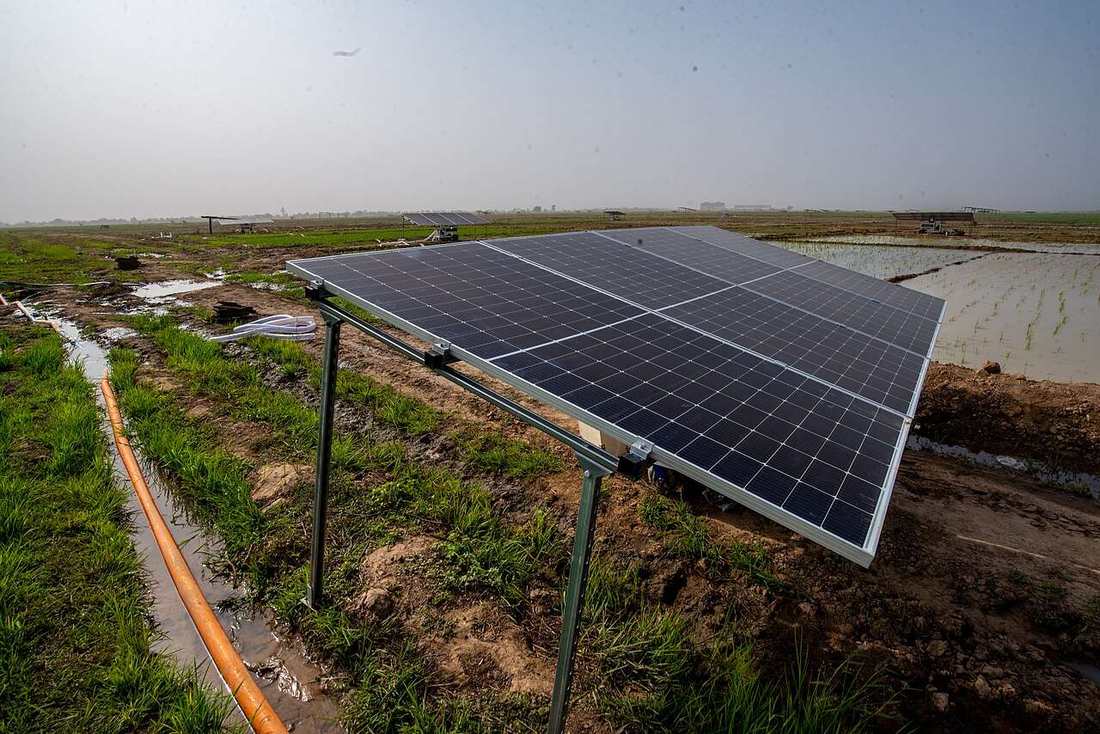
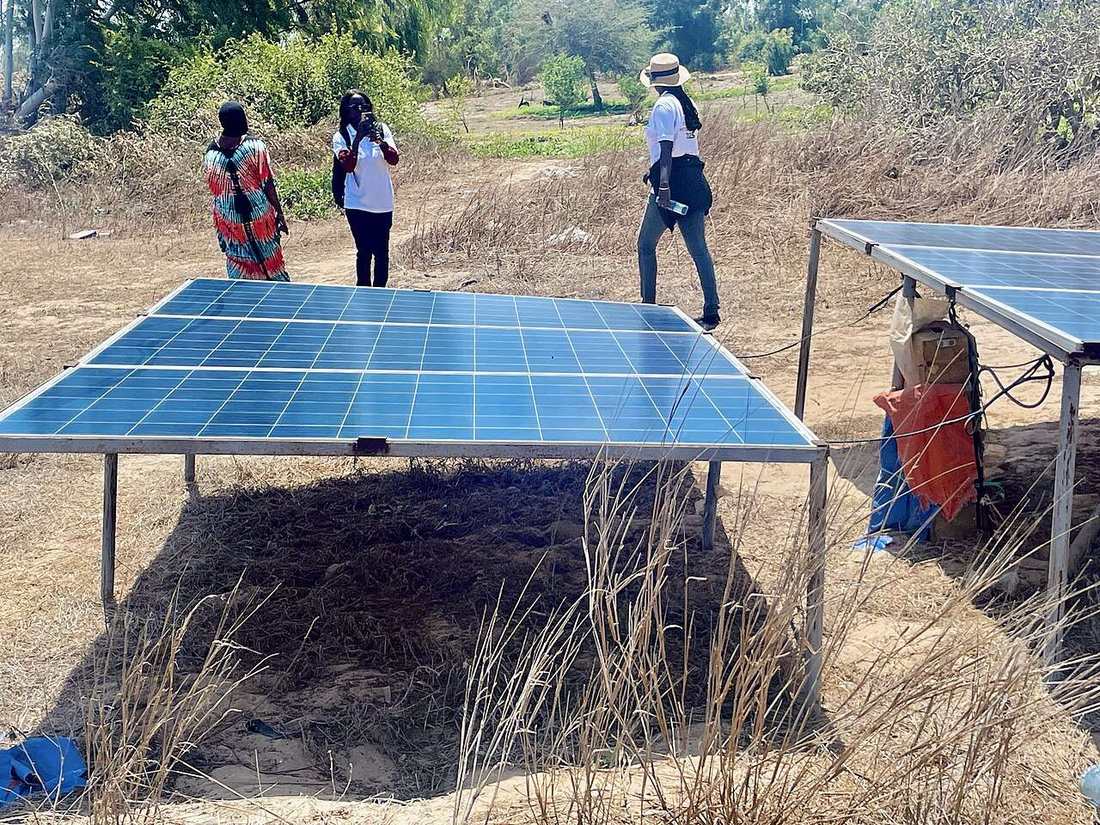
Safe drinking water at the hub water point and filters sold through the counter; solar pumping for cooperative plots and marsh-edge rice that extends the cropping season and buffers rain-fed farming against drought.
Who pays
Water by the cubic meter; irrigation by the hectare and the season.
Who carries it
Platform pumps and treatment; water and agriculture partners set the standards.
Solar panels powering an irrigation pump beside a rice field, Nigeria, 2025Solar array powering irrigation on a market-garden field, Niagues, Senegal, 2025
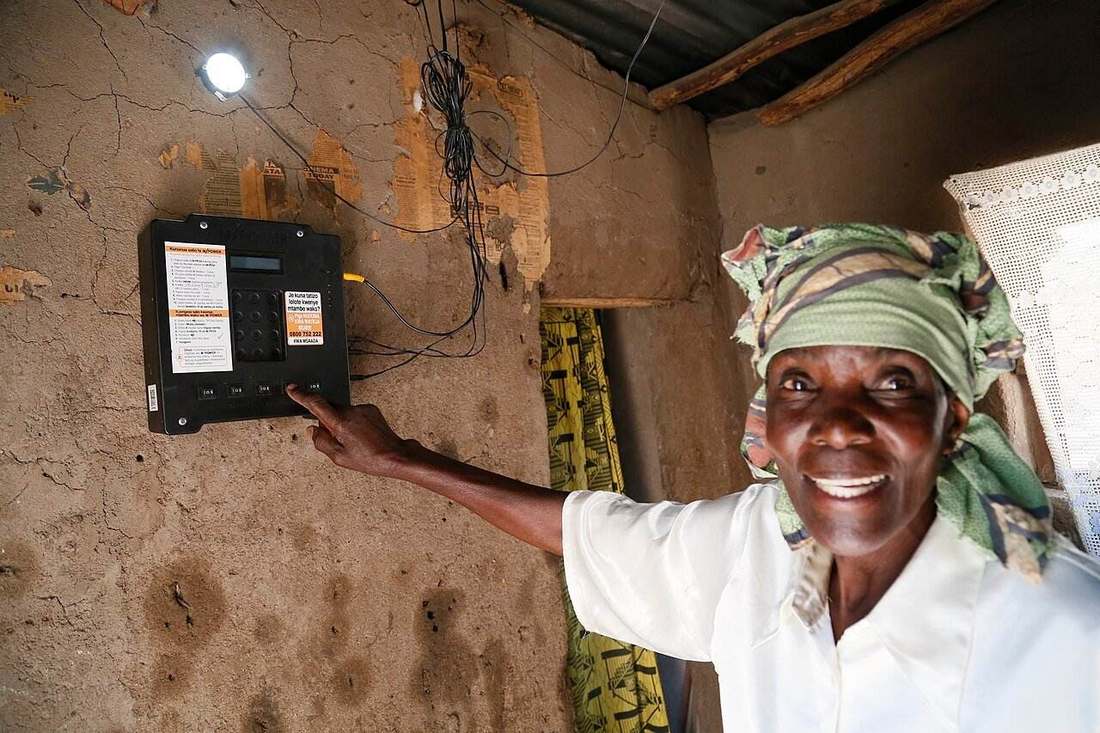
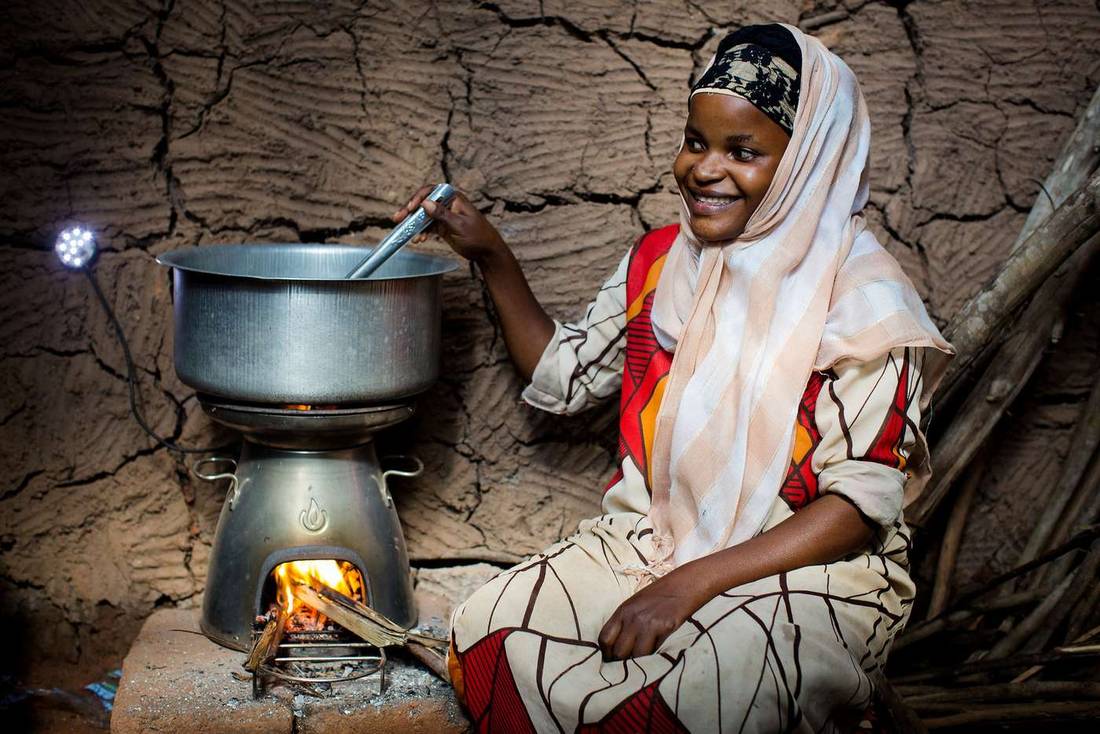
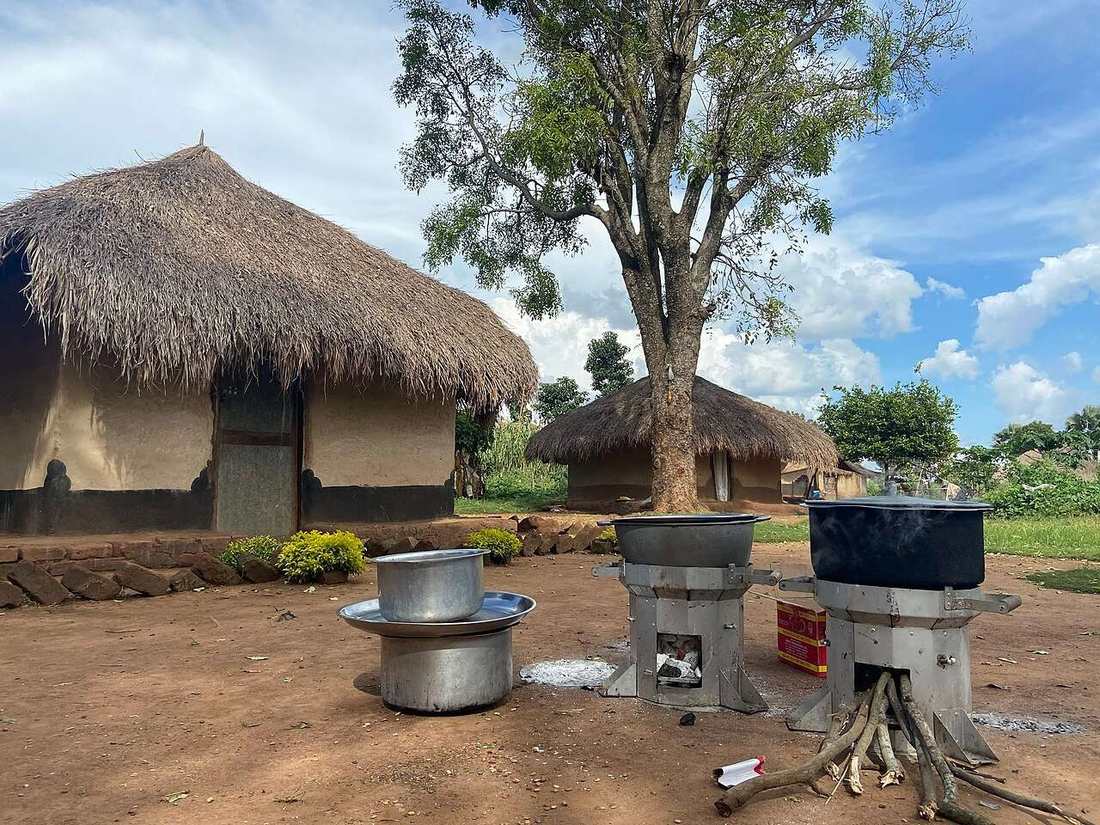
Points of sale — solar home systems and clean cooking
Sold, financed and serviced at the hub, for the life of the product.
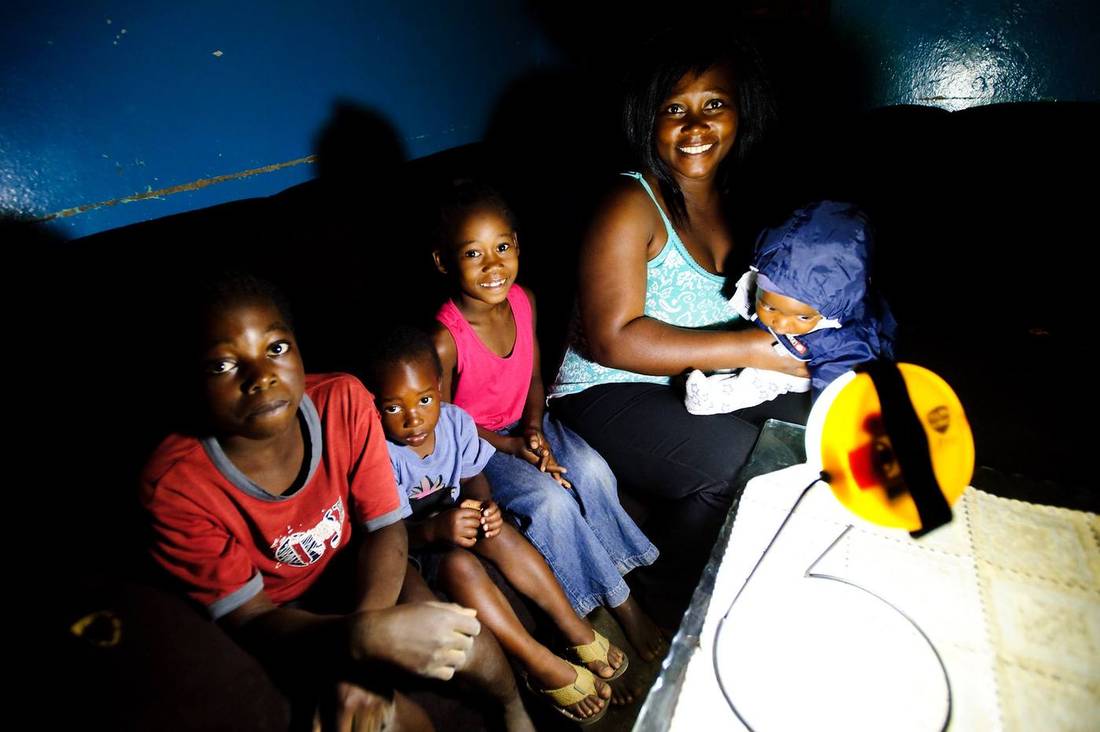
Certified solar home systems, appliances and clean cookstoves — briquette and electric — with enrollment, pay-as-you-go collection, spare parts and a permanently staffed counter. Aftercare is the product: repair, replacement, reconditioning and e-waste handled for years, not to the point of sale.
Who pays
Margin on the sale; pay-as-you-go through mobile money.
Who carries it
Certified manufacturers supply; the hub sells and services; agents reach the villages.
A family's home lit by a Sun King Pro solar lamp, Lwimba, ZambiaWall-mounted solar home system with pay-as-you-go control unit, TanzaniaCooking on a modern clean-burning stove in a farm kitchen, KenyaImproved cookstoves in use in a settlement, Uganda, 2020
E-mobility and last-mile logistics
Hub-charged two- and three-wheelers: produce out, residues back.
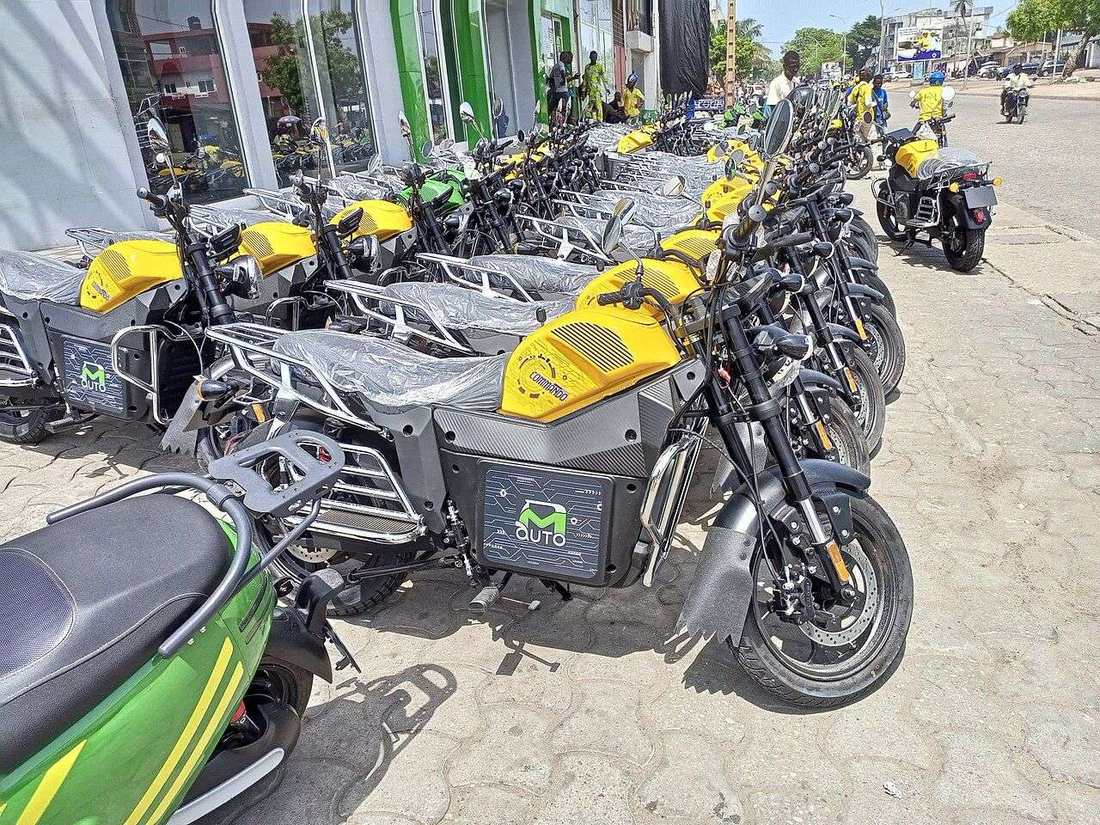
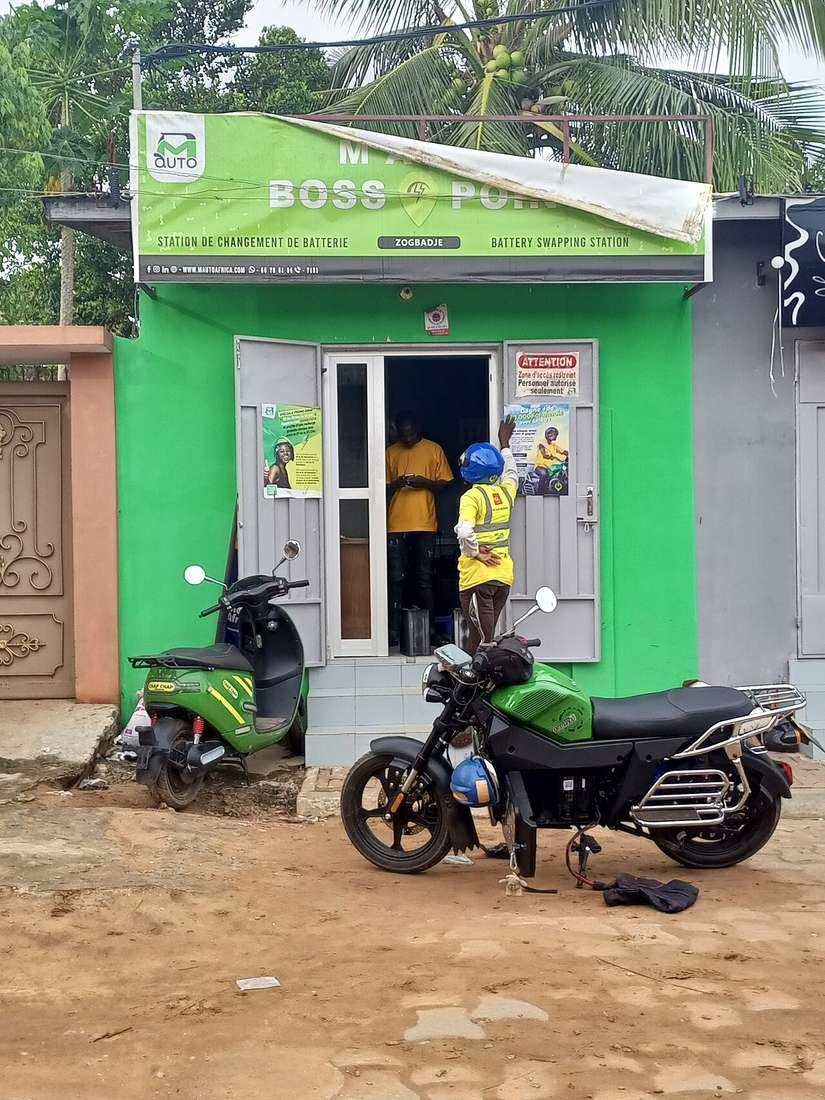
Electric motorcycles and tricycles charge on hub solar during the day. Outbound they carry produce to market, solar systems, stoves, filters, medicines and repaired goods to the villages. Inbound they bring crop residues and manure to the aggregation site, samples to the clinic and items to the workshop. Every electric kilometer displaces imported fuel.
Who pays
Charging by the kilowatt-hour; fleets run through cooperatives on battery-as-a-service.
Who carries it
Specialist e-mobility operators; the hub provides charging, routes and maintenance.
Fleet of electric motorcycles outside a dealership, Benin, 2023Battery-swapping station for electric motorcycles, Benin, 2023
Waste-to-energy — the circular loop
Residues in; briquettes, biogas and organic fertilizer out.
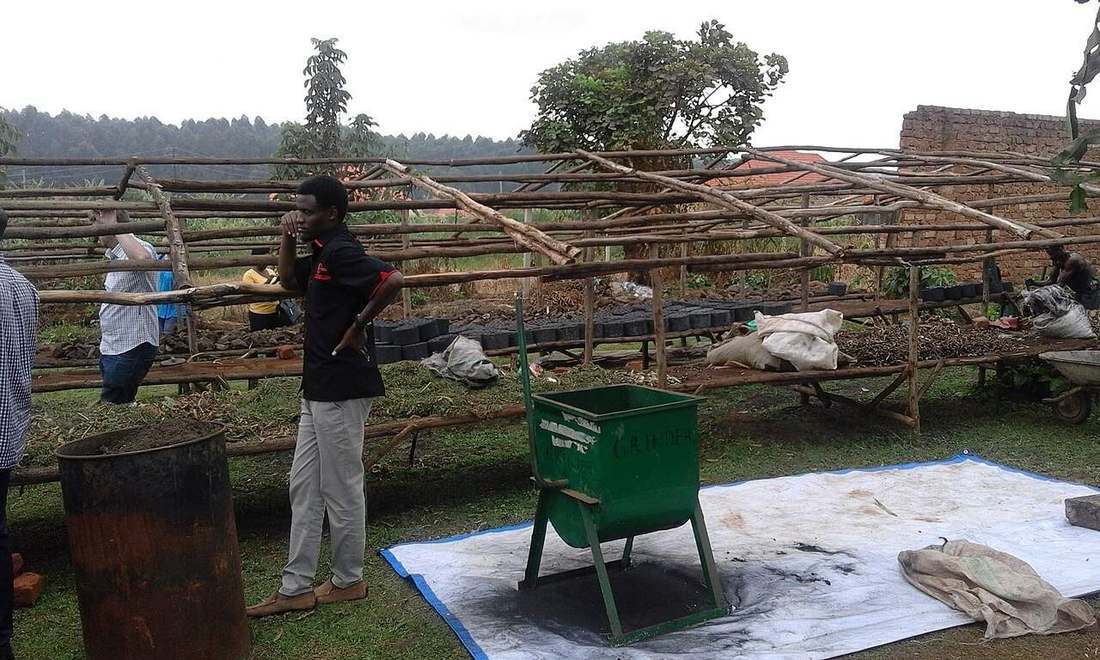
Agricultural and animal residues collected on the return leg are pressed into briquettes and digested into biogas at aggregation sites, and return to the villages as cooking fuel at about half the price of charcoal, storable fuel for on-demand power, and fertilizer and biochar for the fields. The recurring cooking input is made domestically from local waste — no imported-fuel exposure in a currency crisis.
Who pays
Fuel, fertilizer and biochar sales.
Who carries it
Platform aggregation sites; agricultural partners on feedstock and soils.
Fixed-dome biogas digester on a farm near Arusha, TanzaniaBriquette press and drying trays at a fuel-briquette yard, Kampala, Uganda, 2016
A business center with satellite connectivity where rural learners get online. Accredited programs with national and international universities are tailored to the district's economy so knowledge converts to skills that pay locally. Three tracks: hub operation and maintenance; agricultural best practice for dissemination through cooperatives; and solar installation and maintenance as a transferable trade.
Who pays
Rent to the institutions that run the programs; connectivity by usage.
Who carries it
Universities and training institutions; the continental academy certifies the trainers.
Pole-mounted Starlink satellite terminalLaptop classroom at a school, Nairobi, Kenya, 2017
Tele-health — women and children first
Remote consultation, vaccine-grade refrigeration, vision screening and glasses.
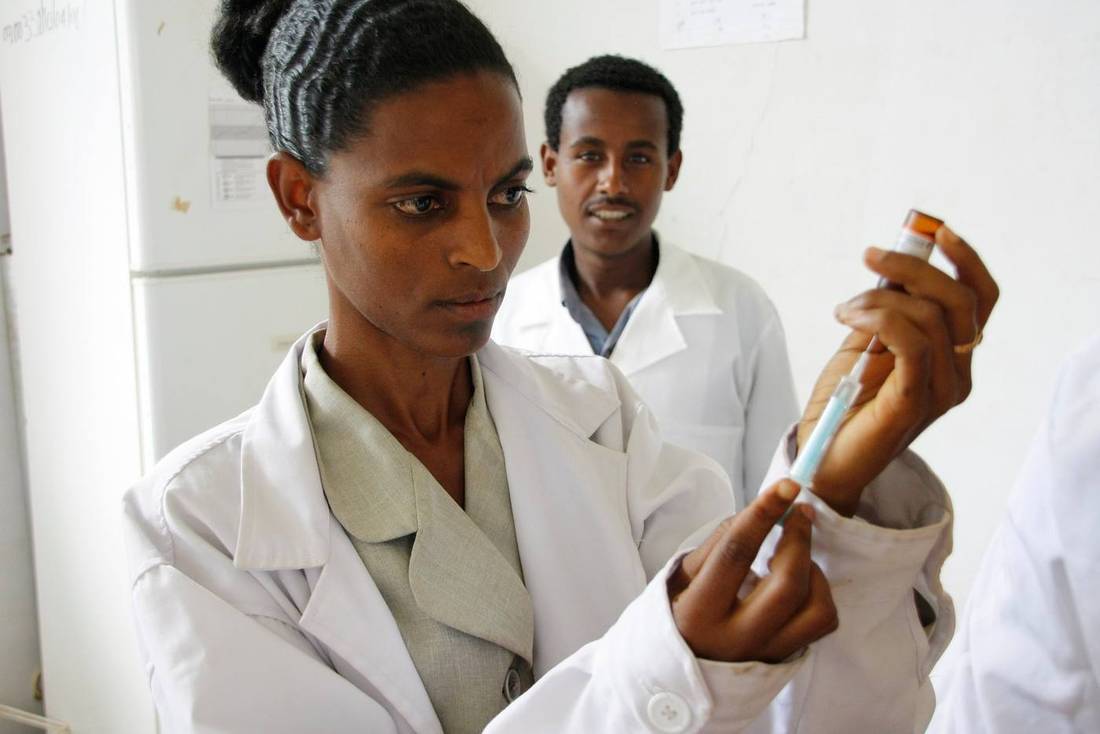
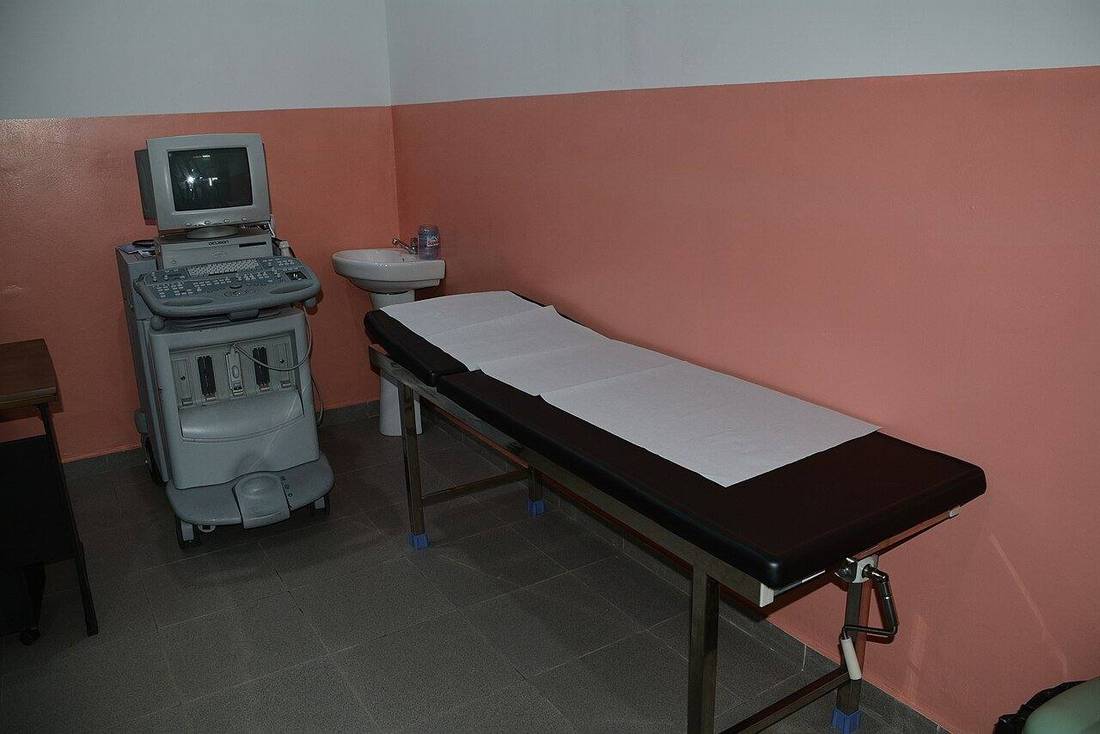
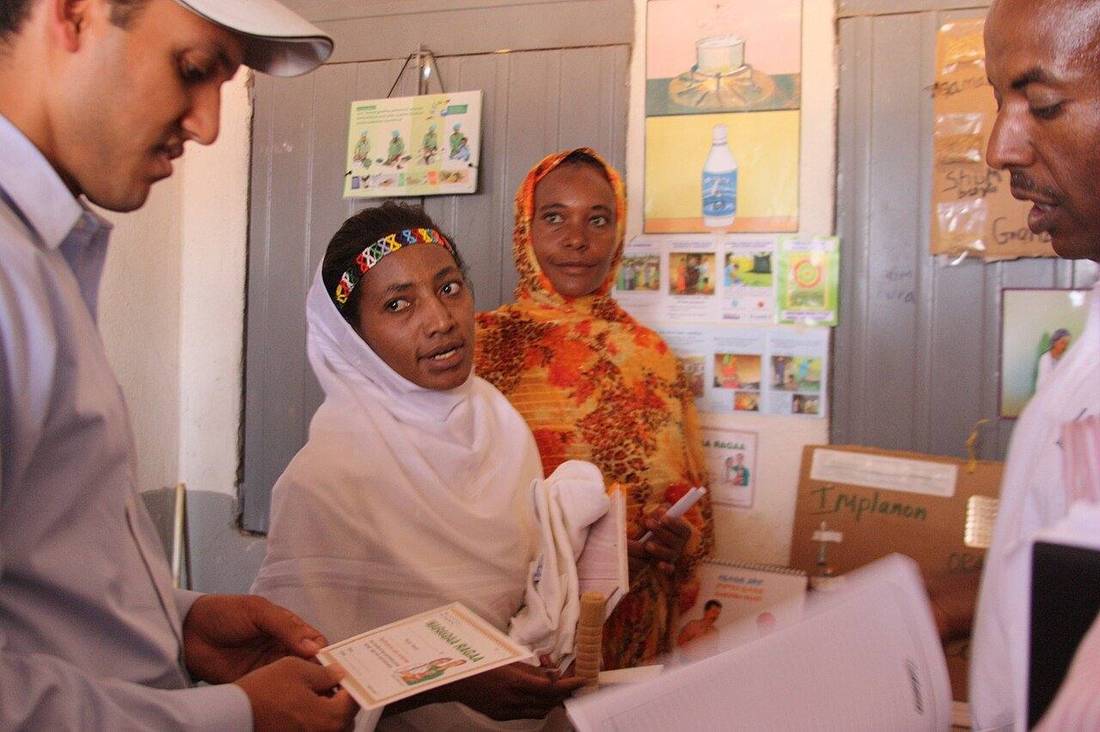
Maternal and child health by remote consultation and referral, with vaccine-grade refrigeration on hub power. Last-mile agents trained in basic care carry measurement devices and AI-assisted triage to the villages, take samples and readings back to the hub, and deliver medicines and glasses on the return route. Catching a child's refractive error early is among the most cost-effective interventions in global health.
Who pays
Health partners under their own programs; affordable fees for glasses and consultations.
Who carries it
Health institutions and NGOs; the hub provides power, cold chain, connectivity and reach.
Nurse preparing a measles vaccine at a health-center refrigerator, EthiopiaUltrasound scanner in a hospital sonography room, Douala, Cameroon, 2021Health extension workers counseling a young mother at a health post, Ethiopia
Financial-service point
Payments, savings and credit where the district already comes to work.
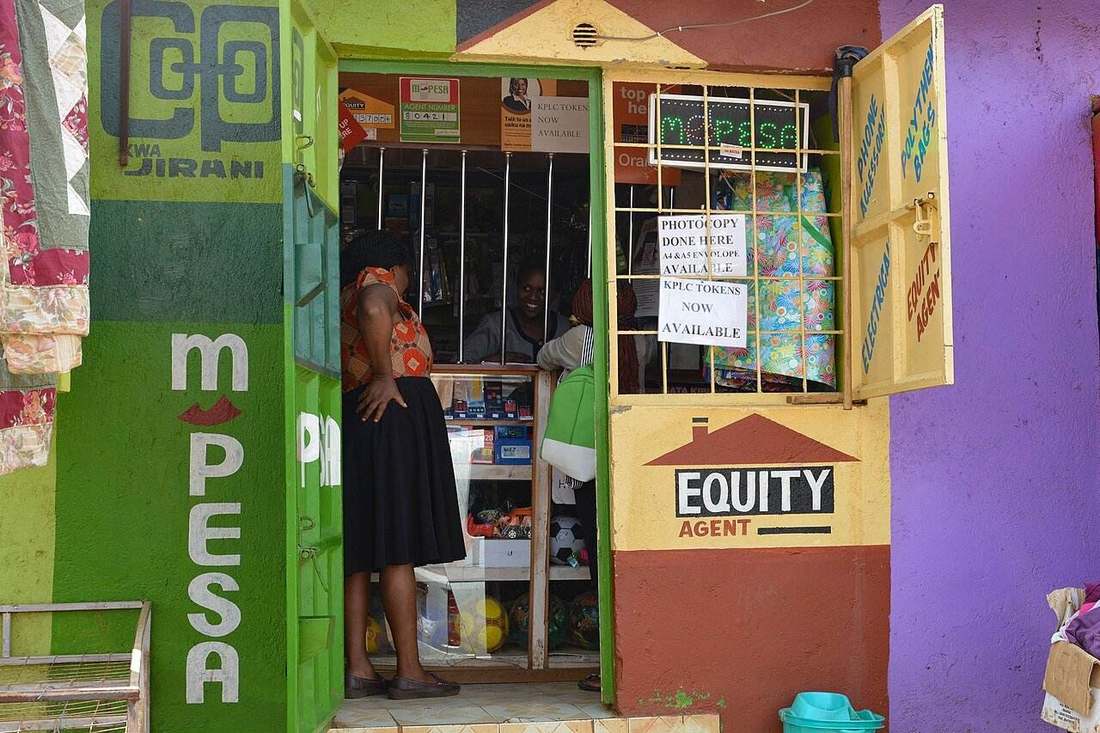
A banking counter with domestic banks and microfinance partners. The hub's metered consumption, processing throughput and payment records give a lender a live view of which enterprises are performing; produce held and processed at the hub can be lent against; repayment is collected where revenue is earned. Cooperatives are the counterpart for collective bargaining and aggregation.
Who pays
The banks earn the lending margin; the hub earns on the services financed.
Who carries it
Domestic banks and microfinance institutions; the platform supplies the data spine and the counter.
Mobile-money and bank agent counter, Nairobi, Kenya, 2016
Cooperatives, agri-SMEs and youth- and women-led businesses built on hub services.
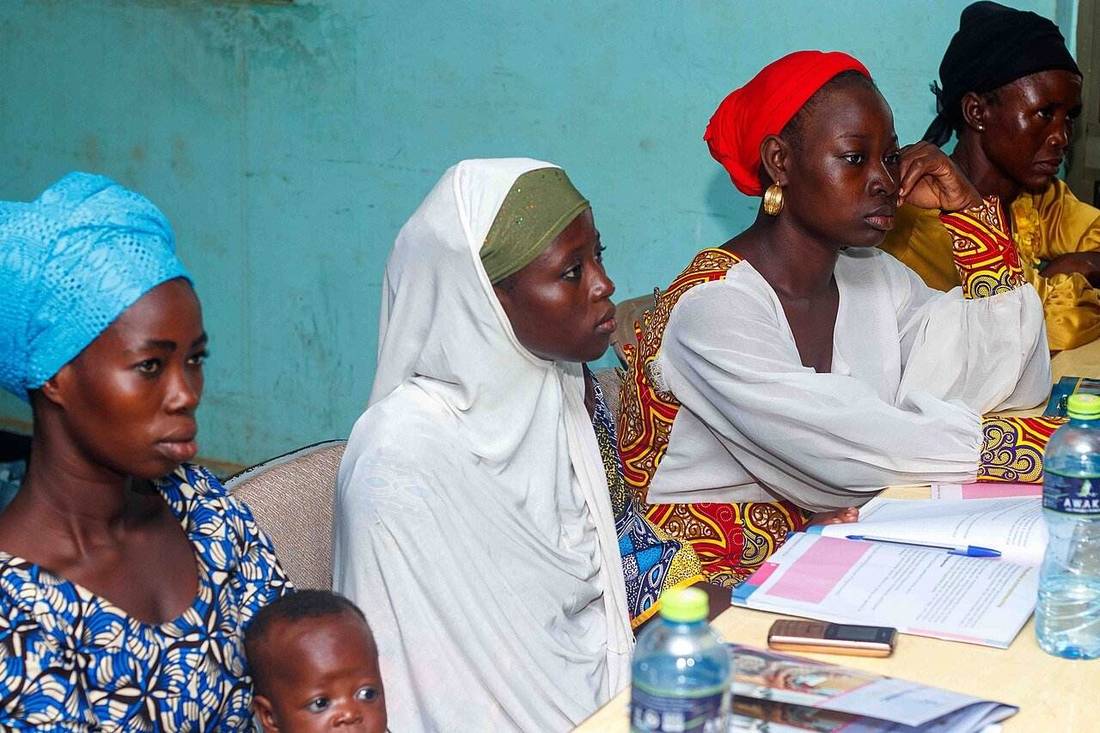
Enterprise bays, mentors and the network member's incubation methodology turn hub services into businesses: a miller, a cold-chain trader, a solar technician, an e-mobility operator. Usage, sales and payment data make each emerging business legible to lenders and early-stage investors — rare in frontier markets, standard at a hub.
Who pays
Hosted enterprise rent; early-stage capital from partner windows.
Who carries it
The African Agribusiness Incubators Network member in each country.
Entrepreneurial training session for young women, Ghana, 2024
Workshop, spares and repair
Aftercare that escalates: agent, hub counter, central depot.
A workshop and spares stock at every anchor hub, with senior technicians and the main repair center at the technical base. Every installation and service visit is recorded geospatially, so any unit sold can be found, serviced, warranted and reported on years later — the condition of credible results-based and carbon reporting.
Who pays
Warranty and service fees, built into the price of every product sold.
Who carries it
The platform's engineering and procurement office; local youth trained as technicians.
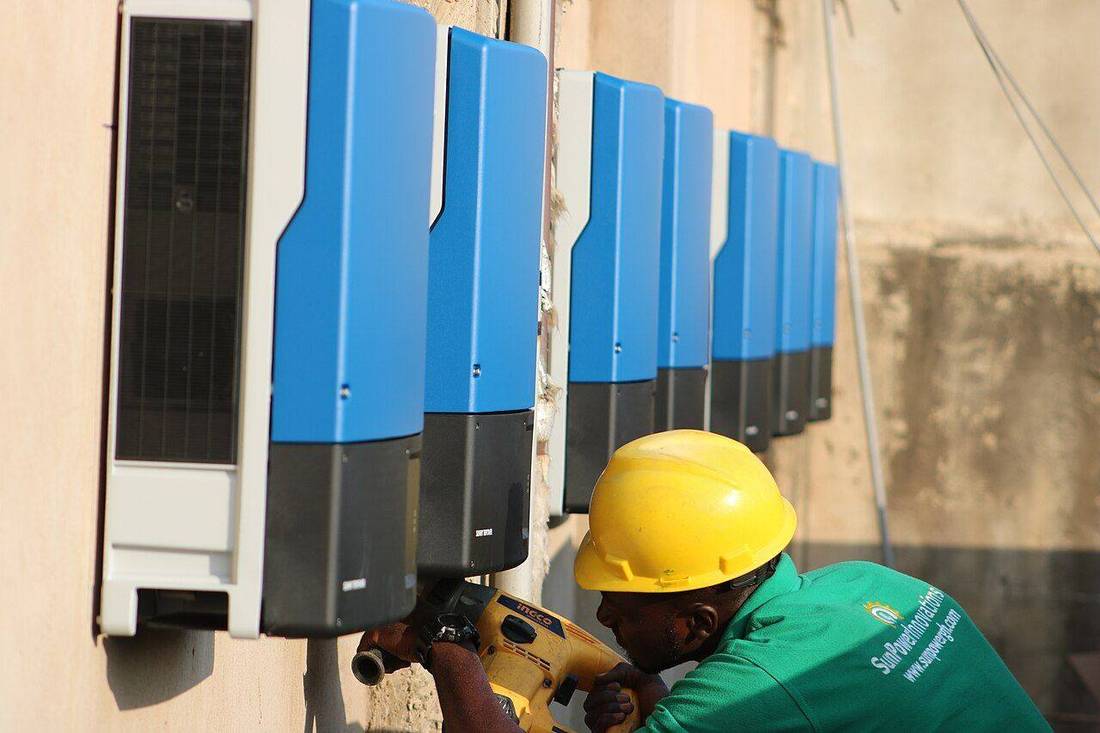
Technicians wiring a bank of solar inverters, Ghana, 2017
Mini-grid at the viability gate
Distribution follows measured demand and payment discipline.
The hub is a precursor to a mini-grid, not a substitute. Load, revenue record and collections are established first; distribution is built where measured demand clears a viability gate, or sooner where a government, utility or funder wants to move faster. Generation can be scaled and sold to commercial and industrial offtakers under direct power purchase agreements. Every tier is built grid-ready, with interconnection provision costed in and transfer values set by a published formula.
Who pays
Tariffs under the national framework; long-term commercial offtake where available.
Who carries it
The platform, in harmony with the national distribution utility and rural electrification agency.
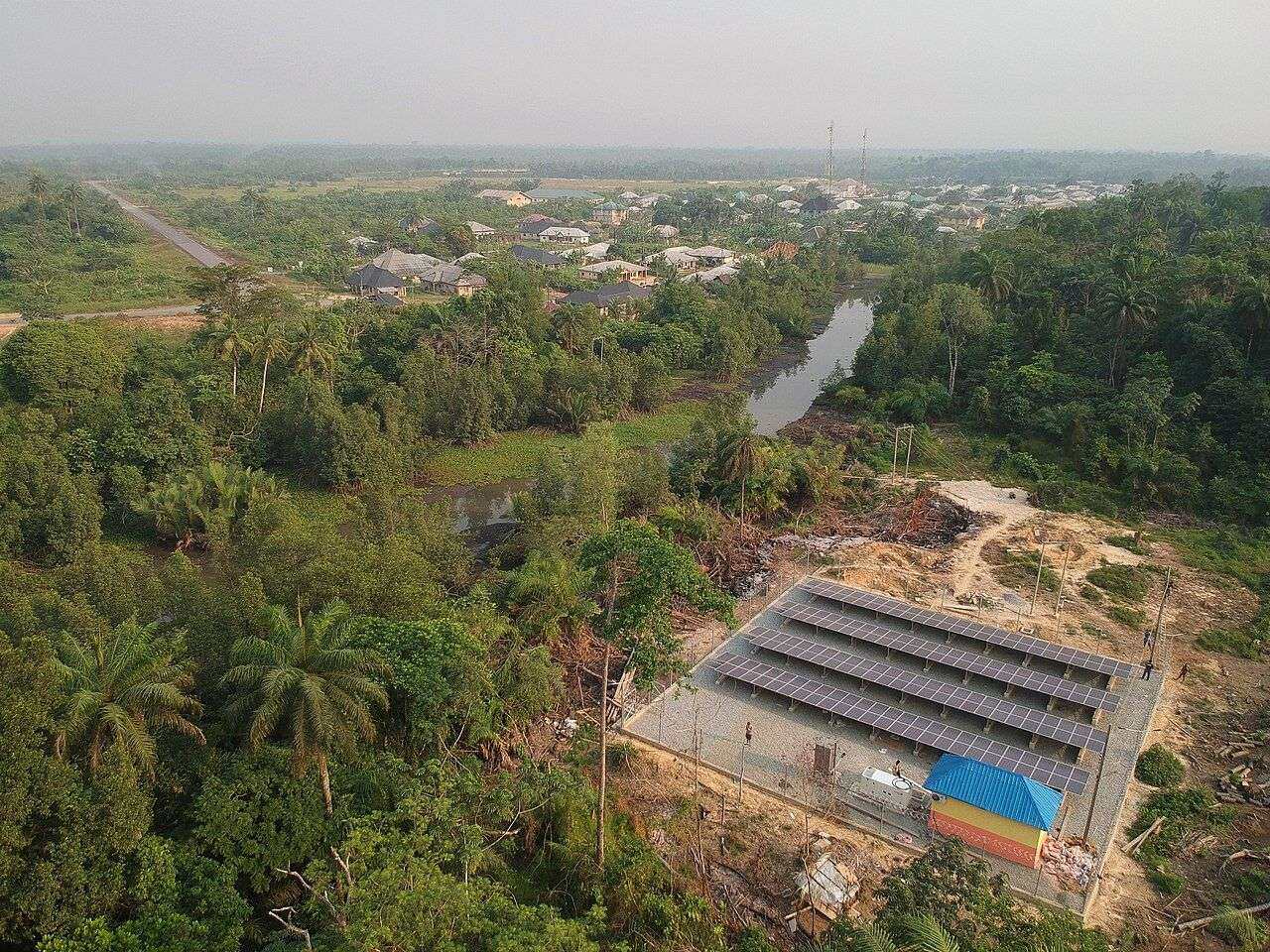
Aerial view of a village solar mini-grid, Bayelsa State, Nigeria, 2020
Three sizes, one design logic.
Equipment sets are configured to the crops and volumes of the district, not to a fixed template. Figures are indicative.
Anchor hub
State or provincial level
≈400 kWp solar with storage
Heavy processing lines, cold rooms, a workshop, a spares depot and a training wing. The technical base of a cluster.
Standard hub
District level
≈120 kWp
Milling, oil press, dryer, cold room, workshop, points of sale, connectivity and the banking counter.
Light spoke
Cluster level
≈35 kWp
Milling, a chiller, a retail and after-sales point, charging — the services kiosk of a village cluster.
kWp is kilowatts of peak solar capacity.
The last-mile loop.
One route, many revenue lines. The same trip earns in both directions.
Outbound from the hub
Produce to market
Solar home systems, stoves and filters
Briquettes, biogas and fertilizer
Medicines and glasses
Repaired goods from the workshop
Inbound to the hub
Crop residues and manure to the aggregation site
Harvest to the mill and the cold room
Samples and health readings to the clinic
Faulty units to the workshop
Payments and data
Locally recruited agents cover the near villages on foot and the far ones by hub-charged electric two-wheelers. Remoteness does not decide who is served.
Modular by design — never stopped at any stage.
Every element is a fundable unit — a hub, a cluster, a mini-grid, a country wheel, a training cohort. Each closes on its own gate; a delay in one never halts the others. Go small, go big: like telecom, no waiting for the grid. The economics are in the logistics and in spreading fixed costs across the network.
This is why so many mini-grids died at handover: a village-scale site cannot carry engineering, importation, warranties, legal and accounting alone. In the network those sit at continental and country level, and each hub adds services at near-marginal cost.
Solar photovoltaic generation with battery storage, sized for the daytime productive load, engineered for a twenty-five-year life and grid-ready by design.
Mubuga solar plant, Gitega province, Burundi — 7.5 MW, in service since 2021, developed and operated by the team behind PURE Power AfricaModule rows at a 10 MW photovoltaic plant, eastern Uganda
Milling, pressing, drying, packing — the first service rural households pay for.
Productive power and agri-processing
Hammer and rice mills, oil presses, dryers and packing lines arrive with the hub. Value addition moves back to the village: flour instead of grain, oil instead of seed, graded and dried produce instead of a distress sale at harvest.
Maize mill producing flour, Uganda, 2025Hammer mill with cyclone and elevator at a maize mill, Uganda, 2025Screw press extracting oil from boiled palm fruit, Nigeria, 2025
Who pays
Fee for service by the kilogram, or a share of the value added on what is processed.
Who carries it
The platform owns and operates the equipment; the agricultural pillar partner specifies the value chains.
Walk-in cold rooms that turn a perishable harvest into a sellable one.
Cold storage and cold chain
Solar cold rooms hold vegetables, fruit, fish and dairy through price troughs and to market days. Cold chain opens higher-value buyers — supermarkets, processors, exporters — that a warm truck can never reach.
Photographs of this module are added as the first hubs are commissioned.
Who pays
Rent by the crate and the day.
Who carries it
Platform equipment; cooperatives aggregate the volumes.
Solar pumping, filtration and low-lift irrigation as a community service.
Water — drinking and irrigation
Safe drinking water at the hub water point and filters sold through the counter; solar pumping for cooperative plots and marsh-edge rice that extends the cropping season and buffers rain-fed farming against drought.
Solar panels powering an irrigation pump beside a rice field, Nigeria, 2025Solar array powering irrigation on a market-garden field, Niagues, Senegal, 2025
Who pays
Water by the cubic meter; irrigation by the hectare and the season.
Who carries it
Platform pumps and treatment; water and agriculture partners set the standards.
Sold, financed and serviced at the hub, for the life of the product.
Points of sale — solar home systems and clean cooking
Certified solar home systems, appliances and clean cookstoves — briquette and electric — with enrollment, pay-as-you-go collection, spare parts and a permanently staffed counter. Aftercare is the product: repair, replacement, reconditioning and e-waste handled for years, not to the point of sale.
A family's home lit by a Sun King Pro solar lamp, Lwimba, ZambiaWall-mounted solar home system with pay-as-you-go control unit, TanzaniaCooking on a modern clean-burning stove in a farm kitchen, KenyaImproved cookstoves in use in a settlement, Uganda, 2020
Who pays
Margin on the sale; pay-as-you-go through mobile money.
Who carries it
Certified manufacturers supply; the hub sells and services; agents reach the villages.
Hub-charged two- and three-wheelers: produce out, residues back.
E-mobility and last-mile logistics
Electric motorcycles and tricycles charge on hub solar during the day. Outbound they carry produce to market, solar systems, stoves, filters, medicines and repaired goods to the villages. Inbound they bring crop residues and manure to the aggregation site, samples to the clinic and items to the workshop. Every electric kilometer displaces imported fuel.
Fleet of electric motorcycles outside a dealership, Benin, 2023Battery-swapping station for electric motorcycles, Benin, 2023
Who pays
Charging by the kilowatt-hour; fleets run through cooperatives on battery-as-a-service.
Who carries it
Specialist e-mobility operators; the hub provides charging, routes and maintenance.
Residues in; briquettes, biogas and organic fertilizer out.
Waste-to-energy — the circular loop
Agricultural and animal residues collected on the return leg are pressed into briquettes and digested into biogas at aggregation sites, and return to the villages as cooking fuel at about half the price of charcoal, storable fuel for on-demand power, and fertilizer and biochar for the fields. The recurring cooking input is made domestically from local waste — no imported-fuel exposure in a currency crisis.
Fixed-dome biogas digester on a farm near Arusha, TanzaniaBriquette press and drying trays at a fuel-briquette yard, Kampala, Uganda, 2016
Who pays
Fuel, fertilizer and biochar sales.
Who carries it
Platform aggregation sites; agricultural partners on feedstock and soils.
A business center with satellite connectivity where rural learners get online. Accredited programs with national and international universities are tailored to the district's economy so knowledge converts to skills that pay locally. Three tracks: hub operation and maintenance; agricultural best practice for dissemination through cooperatives; and solar installation and maintenance as a transferable trade.
Pole-mounted Starlink satellite terminalLaptop classroom at a school, Nairobi, Kenya, 2017
Who pays
Rent to the institutions that run the programs; connectivity by usage.
Who carries it
Universities and training institutions; the continental academy certifies the trainers.
Remote consultation, vaccine-grade refrigeration, vision screening and glasses.
Tele-health — women and children first
Maternal and child health by remote consultation and referral, with vaccine-grade refrigeration on hub power. Last-mile agents trained in basic care carry measurement devices and AI-assisted triage to the villages, take samples and readings back to the hub, and deliver medicines and glasses on the return route. Catching a child's refractive error early is among the most cost-effective interventions in global health.
Nurse preparing a measles vaccine at a health-center refrigerator, EthiopiaUltrasound scanner in a hospital sonography room, Douala, Cameroon, 2021Health extension workers counseling a young mother at a health post, Ethiopia
Who pays
Health partners under their own programs; affordable fees for glasses and consultations.
Who carries it
Health institutions and NGOs; the hub provides power, cold chain, connectivity and reach.
Payments, savings and credit where the district already comes to work.
Financial-service point
A banking counter with domestic banks and microfinance partners. The hub's metered consumption, processing throughput and payment records give a lender a live view of which enterprises are performing; produce held and processed at the hub can be lent against; repayment is collected where revenue is earned. Cooperatives are the counterpart for collective bargaining and aggregation.
Mobile-money and bank agent counter, Nairobi, Kenya, 2016
Who pays
The banks earn the lending margin; the hub earns on the services financed.
Who carries it
Domestic banks and microfinance institutions; the platform supplies the data spine and the counter.
Cooperatives, agri-SMEs and youth- and women-led businesses built on hub services.
Incubation and enterprise
Enterprise bays, mentors and the network member's incubation methodology turn hub services into businesses: a miller, a cold-chain trader, a solar technician, an e-mobility operator. Usage, sales and payment data make each emerging business legible to lenders and early-stage investors — rare in frontier markets, standard at a hub.
Entrepreneurial training session for young women, Ghana, 2024
Who pays
Hosted enterprise rent; early-stage capital from partner windows.
Who carries it
The African Agribusiness Incubators Network member in each country.
Aftercare that escalates: agent, hub counter, central depot.
Workshop, spares and repair
A workshop and spares stock at every anchor hub, with senior technicians and the main repair center at the technical base. Every installation and service visit is recorded geospatially, so any unit sold can be found, serviced, warranted and reported on years later — the condition of credible results-based and carbon reporting.
Technicians wiring a bank of solar inverters, Ghana, 2017
Who pays
Warranty and service fees, built into the price of every product sold.
Who carries it
The platform's engineering and procurement office; local youth trained as technicians.
Distribution follows measured demand and payment discipline.
Mini-grid at the viability gate
The hub is a precursor to a mini-grid, not a substitute. Load, revenue record and collections are established first; distribution is built where measured demand clears a viability gate, or sooner where a government, utility or funder wants to move faster. Generation can be scaled and sold to commercial and industrial offtakers under direct power purchase agreements. Every tier is built grid-ready, with interconnection provision costed in and transfer values set by a published formula.
Aerial view of a village solar mini-grid, Bayelsa State, Nigeria, 2020
Who pays
Tariffs under the national framework; long-term commercial offtake where available.
Who carries it
The platform, in harmony with the national distribution utility and rural electrification agency.